
Blogging in the Age of AI: How Everything Has Changed (And Why I’m More Excited Than Ever)
If you’ve skipped blogging because you didn’t have time, that excuse no longer holds. AI has solved the production problem.
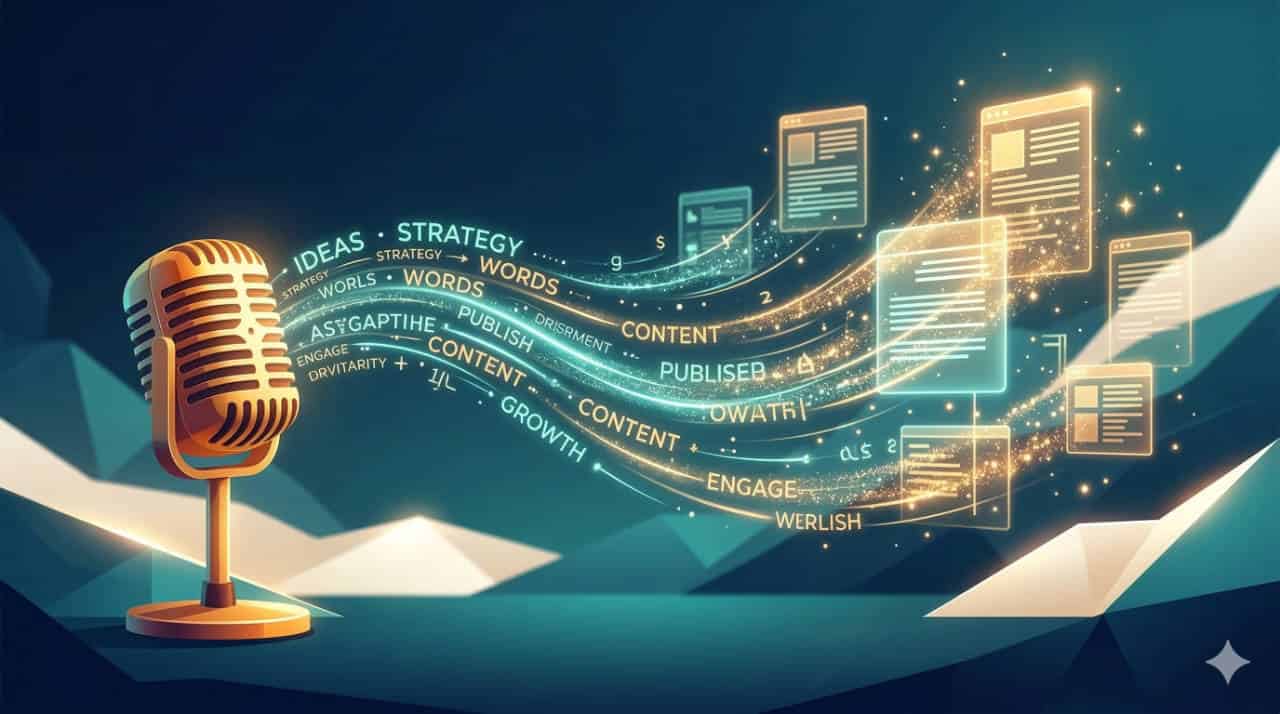
I’m writing this article from my phone.
Not typing it — talking it. I’m walking around right now in an RV campground, dictating into Claude on my iPhone, and by the time you read this, it’ll be a fully polished article. That alone says everything about how much blogging has changed.
And think about what that actually means. Right now I’m on a walk. But this could just as easily be happening in your car on the way to a meeting, on the treadmill at the gym (if you don’t mind people glancing over at you talking to your phone), or during any other chunk of time that used to just… disappear.
Dead time. Waiting time. In-between time. You could be blogging.
That time can now produce content. Real, publishable content that sounds like you and says something worth reading. The writing doesn’t have to happen at a desk anymore — it can happen anywhere you have five minutes and something to say.
I’ve been in this space since 1998. I’ve seen every shift — RSS, social media, SEO algorithm updates, video, podcasts, the rise and fall of a dozen “blogging is dead” cycles. But what’s happening right now with AI feels fundamentally different. Not like a new tool. More like a new operating system for how content gets made.
What I Was Doing Today
Today I spent a part of my day doing a content audit on Blog Marketing Academy . This has been an ongoing project for quite some time – since this site has been around for so long. Hundreds of posts to go through, triage, trash or rewrite and optimize.
This is a massive, tedious undertaking. Especially when I have so many other projects (not to mention client work) going on, too.
Not anymore.
I am building AI-assisted workflows to go through my existing content, identify what is outdated, rewrite pieces that still have good bones, and group my calls to action so they’re actually consistent and strategic across the site. I can now cover ground in my ongoing content audit significantly faster.
This is because not every component of it has to be done manually. Instead, I can be the decision maker. And I can build AI-assisted workflows and agents that do a lot of the manual labor for me.
That’s the shift.
From Writer to Director
For years, blogging meant sitting down and producing — drafting, editing, formatting, publishing. The bottleneck was always output. How much could you write? How fast? How consistently?
Not to mention the tedious work of dealing with blog mechanics. Things like SEO keywords, the feature image, coming up with the excerpt, proofreading – all of it.
AI changes the bottleneck entirely. Now the constraint isn’t production — it’s thinking. Strategy. Judgment. Knowing what your audience actually needs and what makes your perspective worth reading.
You’re no longer just the writer. You’re the director.
That’s a huge mindset shift, and honestly, not everyone has made it yet. A lot of bloggers are still using AI as a shortcut to produce more mediocre content faster. But the ones who get it are using it to do better work — deeper audits, smarter content strategy, more consistent messaging — at a pace that wasn’t possible before.
The Tool Doesn’t Matter as Much as the Workflow
A quick note before we go further: when I talk about AI, I’m not just talking about ChatGPT. That’s the one most people have heard of, but there are real alternatives worth exploring . Claude (which is what I’m using right now, both for this article and for my content workflows today), Gemini, Grok and others. Different tools have different strengths, and the best one is honestly whichever fits your workflow.
While I am using Claude much more than the others these days, I have accounts with all of the major models. In fact, I pay for all of them.
Which brings me to the thing most people get wrong…
The power of what I’m doing right now — walking around dictating an article and having it come out publication-ready — doesn’t come from the AI tool itself. It comes from the system built around it.
For this to work the way it’s working, the AI needs to know you. It needs to understand your voice, your worldview, how you think about your audience, your opinions on your topic. Without that foundation, you’re not going to get anything that sounds like you. You’re going to get generic AI slop that reads like it was written by nobody in particular — because it was.
Building that context — teaching the AI who you are, how you think, what you stand for — is the real work. And it’s work you only have to do once. After that, the leverage is enormous.
What This Means for You as a Content Creator
Here’s the practical takeaway: the gap between creators who embrace this and those who don’t is going to widen fast.
If you’re still treating AI like a novelty or avoiding it because it feels like cheating, you’re leaving a massive amount of leverage on the table. And your competitors aren’t waiting.
And I know the feeling… because I spent some time being way too dismissive about the usage of AI to “write” things. Mainly because I saw all of that AI slop out there and it was clearly crap compared to what we could produce as human beings. But, I came to the realization that the secret is about the AI assisted workflows. The context is what matters most. Then, AI is a massive turboboost that actually does good work.
This isn’t just about prompts. The creators winning right now are the ones building workflows — systems where AI handles the heavy lifting of execution while they stay focused on strategy, voice, and genuine value.
- Content audits that used to take weeks, done in hours
- Repurposing existing content across formats without starting from scratch
- Editing and tightening drafts so your actual ideas shine through
- Consistent CTAs and messaging across your entire site, not just new posts
The Part That Still Matters Most
Here’s what AI can’t do: it can’t replace your experience, your perspective, or your relationship with your audience. It doesn’t know what you’ve lived through, what your readers are actually struggling with, or what you genuinely believe.
That’s still 100% on you.
What AI does is remove the friction between your ideas and the finished product. And when you remove that friction, you can do more of the work that actually matters.
The Barrier That Used to Hold Everyone Back
There’s one more thing I want to address directly, because I know it’s real for a lot of people reading this.
Blogging as a content marketing strategy has always made sense in theory. I literally named this site after that idea. 😎 Consistent content builds authority, drives organic traffic, nurtures your audience, and compounds over time in a way that paid ads never will. Most bloggers and online business owners already know this.
But knowing it and actually doing it are two very different things.
Because the honest truth is — blogging takes time. A lot of it. Sitting down to write a quality article from scratch, editing it, formatting it, making sure it actually says something useful — that’s hours out of your week, every week, indefinitely. For a lot of people, that’s the barrier. Not the ideas. Not the knowledge. Just the sheer time cost of execution.
That barrier is now gone.
Not reduced. Not lowered. Gone.
If you have ideas — opinions, experiences, knowledge your audience needs — you can now get those out of your head and into polished, publishable content faster than ever before. A walk around the block. A voice note in your car. A quick dictation session while you’re doing something else. That’s a blog post now.
Which means the old excuse of “I don’t have time to blog consistently” doesn’t hold the way it used to. The bottleneck was never the ideas. It was the production. And AI has solved the production problem.
If you’ve been putting off content marketing because it felt like too big of a lift — this is your moment to revisit that. The leverage is there. You just have to be willing to build the system and use it.
And so, my workflow for this very blog post was very, VERY different than any post before it.
- I decided to go on a walk in the campground. Nice view of Tampa Bay down the road. So, I grabbed my phone and stepped out.
- I called my wife. Family first, of course. 😍
- I took my iPhone out of my pocket, opened up Claude Mobile, and started dictating the concept for this article.
- It wrote a draft.
- I dictated several tweaks and additions to the article to make sure it covered what I wanted.
- I told it to draft the post to BMA. It was able to do this automatically because of connectors I had already set up.
- When I got back into the RV, I sat down at my laptop, opened the draft in WordPress, and made some additional tweaks by hand that didn’t occur to me earlier.
- I had AI write me a suitable prompt for a good feature image. I plugged that into Gemini (from Google) because I find it to be quite good at image generation.
- I set up the remaining mechanics.
- I hit the Publish button.
All in all… maybe an hour of work. And part of that was just me making my way back to the RV again. 😎
Things have most definitely changed.
I couldn’t do this all the time. I am still a big believer in the superior power of videos for building that relationship and attracting customers. And while I will never do AI-generated videos (that’s just slop), there are definitely ways to utilize AI-assisted workflows on that, too. 👍
Popular Right Now

What If Your Website Was Just… Handled?
I manage WordPress sites for creators and small teams who don’t want to fight tech anymore. Hosting, updates, security, performance — plus a real human you can ask anything.
Tools, checklists, and resources for solopreneurs who want to spend less time on tech — and more time growing. With more tools coming regularly. 😎

